Hernia Surgery
Hybrid surgery in hernias: Our experience
Introduction: Hybrid surgery is a procedure in which laparoscopic and open surgical steps are used for a better outcome to the patient. The aim of this study is to identify the factors that necessitated hybrid surgery in cases of hernia. Materials and Methods: It is a retrospective narrative study of 69 patients with hernia, who […]
READ MORETAPP INGUINAL HERNIA REPAIR
TAPP Inguinal Hernia Repair Patient Selection for TAPP Inguinal Hernia Repair Difficult cases: Direct or small indirect primary hernias in lean and thin subjects are the best during learning curve. Anesthesia General anesthesia Skin Preparation No studies are there assessing preparation for hernia surgery, but as with other surgical procedures, there is no difference in […]
READ MOREഹെർണിയ – പല തരം
ഹെർണിയയെ കുറിച്ചു Dr. R. Padmakumar സംസാരിക്കുന്നു
READ MORE“PK Band” in Laparoscopic Hernia Repair

Ramakrishnapillai, P., Gupta, S., Pai, M. et al. “PK Band” in Laparoscopic Hernia Repair. Indian J Surg (2020). https://doi.org/10.1007/s12262-020-02088-z Abstract Laparoscopic inguinal anatomy detail is different from that is necessary for open hernia surgery. ‘PK Band’ is a condensation of areolar tissue lateral to inferior epigastric vessels on either side. It extends fromarcuate line to apex of triangle of […]
READ MOREInguinal Anatomy with Peritoneum Incised
Previous Page – Inguinal Anatomy with Peritoneum Intact After the peritoneum is dissected away, six additional structures need to be identified. They are Pubic Crest: It helps in getting orientation. Beware of small veins overlying. If they bleed entire vision gets spoiled. Iliopubic Tract: The iliopubic tract is a thick fibrous white tract which runs […]
READ MOREInguinal Anatomy with Peritoneum Intact
Anatomy of Inguinal Region – Previous Page With the introduction of the laparoscope into the abdomen, five important landmarks can be identified in the infra-umbilical region. Inferior epigastric vessels Medial umbilical ligament Spermatic vessels Vas deferens Trapezoid of disaster Inguinal Anatomy with Peritoneum Intact Inferior epigastric vessels The inferior epigastric artery is prominently visualized during […]
READ MOREInguinal Region – Anatomy, Part 2
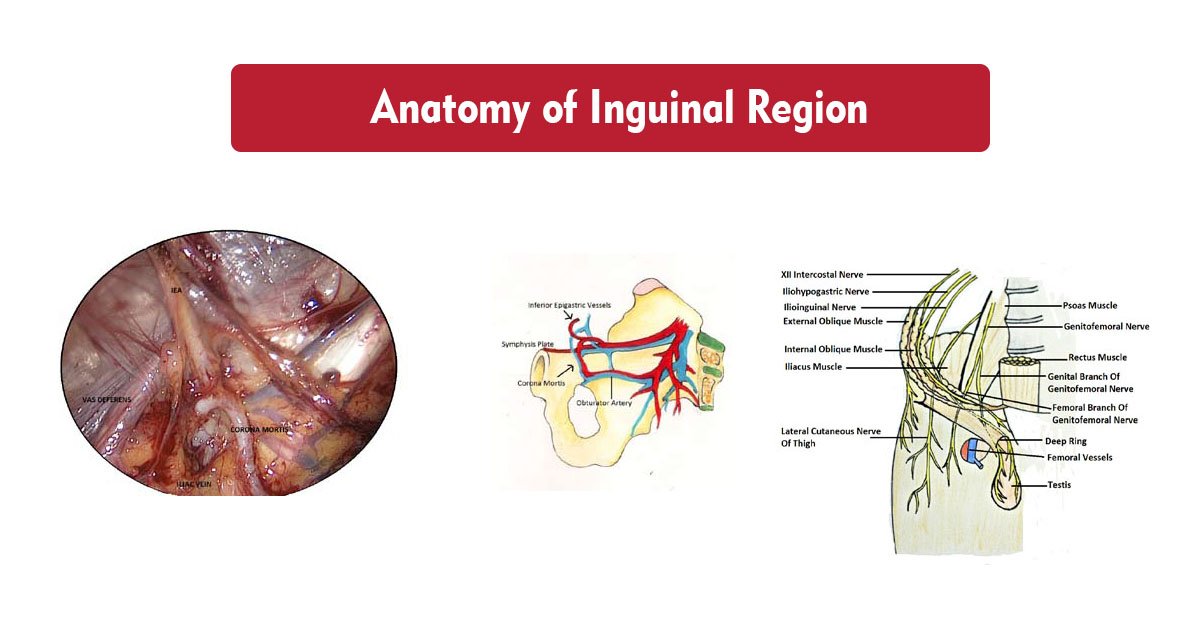
Anatomy of Inguinal Region – Previous Page Transversalis Fascia (of Gallaudet) This fascia is a two layered structure (bilaminar). The anterior layer is adherent to the rectus abdominis muscle. The posterior layer lies in between the anterior layer and the peritoneum. It divides this space into an anterior (vascular space) and a posterior (Space of […]
READ MOREVentral Hernia

What is Ventral Hernia? A Ventral Hernia or abdominal wall hernia is an abnormal protrusion of the contents of the abdominal cavity or of preperitoneal fat through a defect or weakness in the abdominal wall. The abdominal wall is the musculofibrous covering of the contents of the abdominal cavity. A ventral hernia is a hernia […]
READ MOREObturator Hernia
A hernia is caused when the abdominal contents protrude through a weak spot in the abdominal wall. An obturator hernia is a very rare type of hernia that occurs through an opening in the pelvis. An obturator hernia is caused when the intestine bulges through the obturator foramen. This type of hernia occurs in women […]
READ MOREFemoral Hernia
A femoral hernia occurs in the groin junction when the tissues in the lower abdomen push through the upper thigh region. Femoral hernia is common in women as the pelvis region is wider in women when compared to men. Femoral canal contain the ligaments and functions to hold and support the uterus in position. Symptoms […]
READ MORE

-
Anal Fissure Treatment
-
Gynaecomastia Treatment
- Piles / Hemorrhoids Treatment
- Varicose Veins Treatment
- Laser Treatment for Varicose Veins
- Diabetic Foot Treatment